
DX Fest
 The YouTubers Bunch
Callum’s Videos
DX Fest
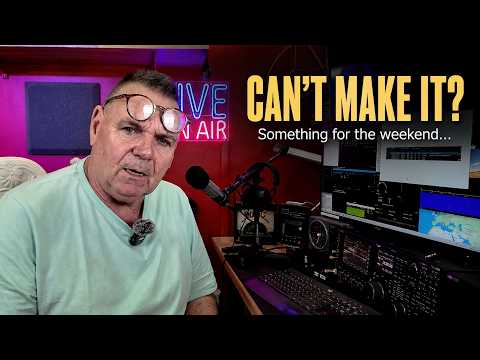
Can’t make it to DXFest? We haven’t forgotten our friends in the USA, Australia, New Zealand—and everywhere else around the world!
For a limited time, use coupon code dxfest at the DX Commander checkout to receive 10% off your order worldwide.
Whether you fancy some DX10 antenna wire, a Classic pole, the guyless Signature 9 – or even the mighty Signature 12.4 – have a browse and see what takes your fancy.
For customers in Europe, ordering through ML&S will normally remain the better option because they handle the VAT and associated import arrangements.
I’ll also try to livestream parts of DXFest, including activity from Stations 1, 2 and possibly our dedicated 10m Station 3. Keep an eye on

Station 3 is alive! I’ve built a dedicated 700-watt 10m ham radio station for DXFest, our DX Commander Open Day – complete with the SY3 beam, rotator control and QSO Director logging.
For the first time, we’ll have three stations available simultaneously: Tim operating on 20m (Station 1), and Station 3 running the club call M0XXT on 10 metres – and on Station 2, we’ll have GB1NHS (probably 40m)
It’s all coming together – despite the 35°C heat and some extremely questionable purple lighting!
DXFest / DX Commander Open Day: Saturday 15 August, 12:00-16:00 at Holly Farm.

In my previous Stereo Monitoring video I stated that the FT-1000MP (and variants) could perform the type of stereo monitoring I enjoy, with Receiver A on one antenna and Receiver B on another while tracking together.
After going back through the FT-1000MP manual, I realised that isn’t actually the case. So here’s a quick correction.
In this short video I explain the mistake and list a number of radios that do support this style of operation, including:
• Kenwood TS-990S
• Yaesu FTDX5000
• Yaesu FTDX9000
• Yaesu FTDX101MP
• Icom IC-7610
• Icom IC-7760
• Icom IC-7851
• Elecraft K3 (dual receiver)
• Elecraft K4D
• Ten-Tec Orion II
• Flex / variants
Stereo monitoring has become one of my favourite operating techniques, especially for DX pile-ups, as it helps separate signals across the stereo image and makes weak stations much easier to pick out.
If you’re aware of any other radios that support true dual-receiver stereo tracking with separate antennas, let us know in the comments.
Cheers, Callum.

Just cruising – nothing serious

I packed a DX Commander Expedition and an entire high-power portable HF station into two large Peli cases and took it to Telford Amateur Radio Club for an evening in the field.
The station comprised my Kenwood TS-590SG, Tokyo Hy-Power HL-700B amplifier, lithium batteries, laptop, iPad second monitor and a DX Commander Expedition with 32 x 7-ft / 2m radials mounted in a water-filled patio umbrella base.
Once the club members had helped (watched!) me assemble everything, we were on the air within 20-minutes. What began as a demonstration quickly became a proper pile-up, with contacts across 40m, 20m, 15m and 10m – and we were even spotted on 6m.
Despite quite a high local noise level, around 100 stations went into the log during approximately 90 minutes of operating. Great signals, lovely evening light and tremendous fun.
Many thanks to everyone at Telford Amateur Radio Club for the welcome, help, coffee and excellent buffet – and thanks to everyone who called me, including the following who made it into the video:
G3HRO, PD9PWR, G4IRN, PA3MIR, F4LQP, M0JSX, OH2GBA, HB9HWS, PD1AR, PD3RL, LA6AY, M7HCV, SP2NW, G1IBS – and many more!
Apologies if I have copied any callsign incorrectly from the recording!
73, Callum M0XXT

**DXFest 2026 is just around the corner!** A quick update ahead of our Open Day on **Saturday 15th August 2026**.
This year we’ve got a new on-site catering arrangement with the fantastic team at **Eagles Café**, just a short walk from the workshop. They’ll be serving a selection of reasonably priced food and drinks throughout the day, including cheeseburgers, chicken, sandwiches, salads, coffees, soft drinks and more.
We’ll also have plenty happening around the site:
* Visit the DX Commander workshop
* Browse the shop (with **20% off on the day**)
* See David’s amateur radio satellite demonstration
* Watch the club station in operation
* Take a walk around the antenna field
* Join us at around **3:30pm** when we’ll lower the main tower for a demonstration
If you haven’t already registered, please do so via the DX Commander website. Registration is free and simply helps us estimate numbers for the day.
📅 **DXFest Open Day**
**Saturday 15th August 2026**
Whether you’ve visited before or this will be your first time, we’d love to see you. Bring a friend, have a wander around, enjoy a burger and a coffee, and spend a few hours with fellow radio amateurs.
73,
Callum M0XXT
DX Commander

WinLog32 was the very first logging program I ever used after getting my amateur radio licence back in 2003. I thought it would be fun to download it again and see how well it still works today..?
This isn’t a polished tutorial or a review from someone who’s been using it for years. It’s simply a "follow along with me" video as I install it from scratch, connect it to my Kenwood, import over 40,000 QSOs and rediscover features I’d completely forgotten about!
If you’re looking for a free, lightweight logging program that will run happily on older computers, WinLog32 is still well worth a look.
We also take a quick look at how it compares with some of the other popular logging programs currently being used by the amateur radio community.
73,
Callum M0XXT
DX Commander
00:00 Why revisit WinLog32?
00:31 Installation
00:52 Creating the first log
01:11 Rig control setup
02:18 CAT control working
02:52 Importing my old log
04:11 Import complete
04:50 Exploring the interface
06:08 Logging a test QSO
07:16 Looking around the menus
08:45 DXCC and reports
09:28 Net Control feature
10:09 Is WinLog32 still worth using?
10:20 Other logging software
11:50 Final thoughts
If I had to start amateur radio all over again, what would I buy… and perhaps more importantly, why? This presentation was recorded live for the Norfolk Amateur Radio Club, where I explored a simple thought experiment: imagine you’ve sold the house, downsized, or lost your entire station. You have a small plot, a sensible budget, and you’re starting from scratch.
What would you build?
We discuss:
• Choosing a radio that gives the best long-term flexibility.
• Why I believe USB-equipped radios changed the hobby.
• Low dipoles vs verticals – and why each has a different job.
• Why 40 metres is really two different bands depending on the time of day.
• The surprisingly effective Loop-on-Ground receive antenna.
• Two VFOs, stereo listening and why I find it so powerful.
• Building a practical station before spending money on expensive hardware.
• Why experimentation is still the most enjoyable part of amateur radio.
This isn’t a review of any particular product, and it certainly isn’t the only way to build a station. It’s simply how I would approach things today, after many years of operating, contesting and experimenting.
Hopefully it gives you a few ideas for your own station.
73,
Callum M0XXT
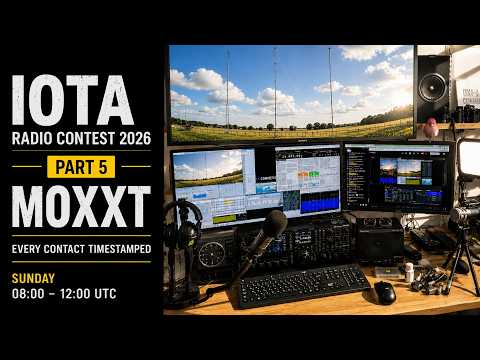
*All QSOs Timestamped*
0:01:36 F/OO4O
0:02:44 DM8DM
0:04:17 TK5K
0:04:44 II2Q
0:05:30 OE6HLF
0:06:39 ES3M
0:07:53 IE9/OL5Y
0:08:23 9A8DV
0:08:39 IN3VVK
0:08:59 SP4Z
0:09:48 F4ABI
0:10:07 IZ7ECL
0:10:25 OM1BAT
0:10:37 HG0R
0:10:52 OZ4GM
0:11:30 G2AA
0:12:16 II3Y
0:13:56 S56B
0:14:20 HA5JP
0:16:19 OM2VL
0:18:17 IU1QQW
0:18:56 F4MNX
0:20:30 9A6A
0:21:14 DK1A
0:22:52 IZ2FOS
0:23:18 IS0ZOD
0:24:39 S52OT
0:25:14 OM4M
0:27:45 9A5D/P
0:30:04 S52WW
0:32:30 IK4LFI
0:33:57 HA9MDN
0:34:59 9A2MW
0:35:53 OE1MBA
0:37:00 9A4KJ
0:38:14 LB3HC
0:39:32 OE4PWW
0:44:47 DL1GRC
0:45:09 IV3JJT
0:45:28 EA3RCA
0:46:22 DO1UTE
0:46:41 DG1GHY
0:47:34 HB525SH
0:49:08 IZ2QGF
0:49:58 LY2CX
0:50:23 I0KHY
0:51:21 DD2IA
0:52:04 OK1OA
0:53:13 IN3UFW
0:53:48 SV1GAX
0:54:06 LZ2ZY
0:54:58 SQ2TOM
1:09:25 G2NV
1:10:20 M8TMM
1:12:56 MM0UDI
1:16:07 LA3BPA
1:18:17 9A9O
1:19:47 9A1AA
1:21:36 IZ3QFG
1:21:58 SP7RON
1:22:26 SM8M
1:22:57 G0FEH
1:24:05 DG4UF
1:25:30 S57PR
1:26:12 EA2WD
1:27:04 IU0UYY
1:27:20 9A8DX
1:27:31 9A2EU
1:28:10 S5/M0MPM
1:28:54 G3AMJ
1:29:37 EA3RCA
1:30:20 LA5LJA
1:31:32 F4LJF
1:31:54 IZ0TWS
1:32:40 LA3BO
1:38:49 DO5FM
1:39:23 IT9YVO
1:39:47 SM4VBO
1:40:38 SP3DFB
1:41:49 OK7N
1:44:22 9A4KJ
1:45:26 OL0W
1:47:47 LC6C
1:48:20 LB1UK
1:48:35 DD0VE
1:49:00 I1POR
1:49:40 UR4LTX
1:50:52 IV3HLQ
1:52:18 DL1ORI
1:52:50 EA3AAY
1:54:00 DO4FOX/P
1:54:22 DH1TST
1:55:12 JA8COE
1:55:44 HA5VA
1:56:05 OK1TEP
1:56:25 IZ3QFG
1:56:58 LB5DK
1:57:26 YM1KE
2:01:09 DL9DX
2:01:41 DG5MLA
2:02:11 IU2VWK
2:02:33 HB9EXA
2:03:22 SP5XMD
2:09:47 OE1SGU
2:10:05 OE3OPW
2:10:59 SQ5EF
2:12:22 ES2UN
2:13:28 LA6AFA
2:15:35 DG1SGP
2:20:03 DL2OE
2:21:02 M0BJL
2:22:09 S56B
2:22:44 IS0ZOD
2:27:19 S53G
2:27:57 OE1SGU
2:30:27 9A1V
2:32:18 DD0VE
2:33:12 HB9DQP
2:34:15 IW4CUG
2:34:33 OK2BRX
2:35:53 IU4FKE
2:36:45 DL9DX
2:37:28 M0KCM
2:39:50 CT2GCB
2:41:42 OK2TS
2:45:39 M0SAZ
2:46:06 G6IGI
2:48:45 F5LIW
2:51:00 9A2BD
2:51:16 DK6OC
2:51:53 DC7SEP
2:54:10 DL7UMA
2:54:33 ES1PAW
2:55:13 LB5HG
2:55:48 DH0GDS
2:56:05 DG5MLA
2:57:28 DH9FAW
2:57:51 LY3CY
2:58:16 OZ/DG1ATN
2:58:40 ON4FF
2:59:31 K4T
2:59:54 HB525SH
3:00:10 DL9DX
3:00:29 DK1FL
3:00:46 II3O
3:01:13 DL3FHB
3:01:55 F4JQY
3:02:13 F4JQN
3:02:34 OZ4NA
3:02:59 OZ4VW
3:03:21 DD1VK
3:03:37 LA3BPA
3:03:53 9A5D/P
3:04:09 9A6AZW
3:06:07 NJ4Z
3:06:52 W2GGI
3:07:11 K4MHD
3:07:49 PJ4DX
3:08:35 VE3XN
3:10:01 KC1QLM
3:10:44 OH3GZ
3:11:23 SE4E
3:11:45 SE5P
3:12:36 OE6TXW
3:13:11 PD9MVR
3:13:34 IB7V
3:13:54 DK9MM
3:14:27 DF4WG
3:15:04 SP4Z
3:15:27 UA3BZ
3:15:51 DG6NI
3:16:50 DJ6HR
3:17:09 OK1LV
3:18:47 SQ2TOM
3:21:34 DL1TV
3:22:11 IQ1LA
3:22:42 IK5QQA
3:23:29 M1BWY
3:23:50 PD0HRY
3:24:22 DB5PJ
3:24:55 PD0TX
3:26:07 DL9RMH/P
3:27:40 PA5LV
3:31:52 DK1A
3:34:50 OH6NIO
3:35:21 F4ISZ
3:36:49 KC3OSD
3:38:08 VY2MP
3:38:45 LY7K
3:42:16 DK1A
3:42:36 N6AR
3:47:34 HA3OU
3:48:15 KC3OSD
3:51:10 IV3WMS
3:51:34 LY7K
3:52:18 LY2CX
3:52:38 IW7EGQ
3:52:58 OE5HDN
3:53:28 LY2NZ
3:54:05 5B4AIX
3:54:19 S56B
3:54:47 LA9RY
3:55:08 OM5AST
3:55:29 DJ9MH
3:55:53 G4XPD
3:56:17 OE4MTI
3:56:30 HB9EP
3:57:00 DL2JL