Build Your Own Radio Without Spending Big — Charlie ZL2CTM
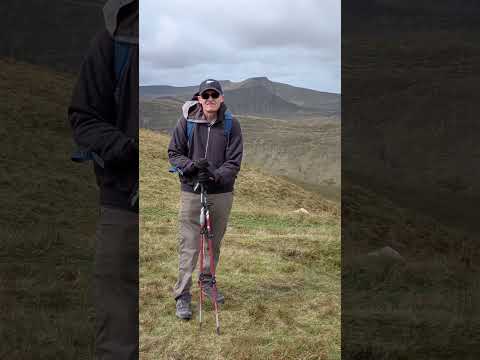
Charlie Morris ZL2CTM is a New Zealand homebrewer and retired Air Force avionics technician who builds radios and electronics projects one module at a time on stripboard over a copper ground plane, housed in plastic food containers from the supermarket. His message is clear: you don’t need expensive PCBs, exotic components, or fancy enclosures to build something that works and gets you on the air.
In this episode we talk through his modular construction approach, why understanding the circuit before you build it makes troubleshooting almost trivial, crystal filter design using cheap AliExpress crystals, what test equipment you actually need to get started, and his thoughts on using AI as a learning tool rather than a shortcut.
Join us as we explore how you can get involved in portable radio, QRP, and more in this episode of the All Portable Discussion Zone (AP/DZ). Every aspect of portable operations is covered in this biweekly podcast, from news and gear to achievements, the workbench, contests, awards, and beyond.
Connect with us:
* Discord: https://discord.gg/WVE3vVveWU
* YouTube: https://www.youtube.com/c/redsummitrf
* TikTok: @redsummitrf
* X (formerly Twitter): @NJ7V_
Support the channel:
* Buy us a Coke: https://www.buymeacoffee.com/RedSummitRF
* Red Summit RF Amazon Storefront: https://www.amazon.com/shop/redsummitrf
I have a friend, I’ll call him Tuje (pronounced Tooge). He has decades of experience in commercial VHF/UHF radio communications. He wants to share his knowledge, but he also wants to remain anonymous. I offered to host his videos on my channel. So here is another video in an ongoing series of helpful videos, primarily relating to VHF communications, but certainly not limited to that topic.
In this Homebrew Workbench Roundtable, Tobias KK7BCO and I are joined by first-time guest Rishav, from Nepal, who recently completed his master’s degree with research focused on relative navigation between two spacecraft and is soon to continue his work as a researcher in spacecraft guidance, navigation, and control (GNC).
HECKT-DUINO is a homebrew Arduino-based LC meter that Tobias and Rishav have been collaborating on. The design traces its roots to Neil Heckt’s article, "Build this self-calibrating LC meter to measure capacitance and inductance," published in the June 1996 issue of "Electronics Now".
For this build, the software has been rewritten for the Arduino Pro Mini using the ATmega328P, with the aim of keeping the code open source, readable, and hackable. Rather than treating the instrument as a black box, the project makes both the hardware and software accessible to anyone who wants to understand how the meter actually works. Rishav walks through the analog circuitry in detail, breaking the design into its main subsystems: the power supply, LC tuned circuit, and relaxation oscillator. The discussion then follows the signal through the circuit and explains how the meter determines inductance and capacitance from changes in oscillation frequency.
A particularly clever part of Heckt’s design is its self-calibration method. By temporarily switching a known reference capacitor into the LC network and measuring the resulting change in frequency, the meter can determine the effective inductance and capacitance of the actual circuit. This means that stray inductance and capacitance present in the physical build are incorporated into the calibration rather than simply ignored.
We also discuss the practical build process, debugging the circuit one subsystem at a time, and why moving the firmware to an Arduino makes the project particularly attractive as a beginner-friendly homebrew instrument. The Arduino implementation makes the frequency measurement, calibration procedure, calculations, display handling, and measurement logic readily available for inspection and modification.
*A small note from Rishav:* I may have stumbled over a few things or not explained some of the technical details as clearly as I would have liked to. My apologies in advance if that happened. That said, I’ll make sure the project documentation makes up for it. The circuit, calculations, calibration method, and build process will all be explained much more clearly and carefully there. I hope you enjoy the podcast, and even better, I hope it inspires you to build your own LC meter!
GitHub repository and project documentation: https://github.com/mathmuggle/heckt
Rishav’s blog: https://mathmuggle.com/
Arduino PRO MINI: https://link.amazon/B02lyB8gf
FTDI programming board for Arduino: https://link.amazon/B0beQfhkc
Screen: https://link.amazon/B08cqbpM4
Any ATmega328P-based Arduino should work. The Pro Mini is particularly well suited to this build because it contains little more than the circuitry required to run the microcontroller, without the onboard USB programming hardware found on boards such as the Arduino Uno. This makes it inexpensive and compact for a permanent homebrew instrument, while using the same board also keeps the pinout consistent with the project documentation.
Note that all of these are available also on eBay and Aliexpress.
Connect with us:
* Discord: https://discord.gg/WVE3vVveWU
* YouTube: https://www.youtube.com/c/redsummitrf
* TikTok: @redsummitrf
* X (formerly Twitter): @NJ7V_
Support the channel:
* Buy us a Coke: https://www.buymeacoffee.com/RedSummitRF
* Red Summit RF Amazon Storefront: https://www.amazon.com/shop/redsummitrf
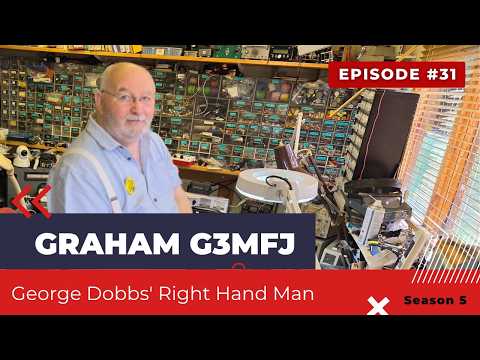
Inside the G QRP Club — Graham G3MFJ on George Dobbs & the Sudden Kits
Graham G3MFJ has been building electronics since neighbors started dropping off broken valve radios for him to fix as a child. Licensed since 1957, he eventually found his way to the G QRP Club through a friend (Tony G4WIF) who paid his first year’s membership without asking, and ended up spending years as the club’s treasurer and parts buyer — sourcing SA602s by the thousand and 2N3866 transistors by the hundreds to keep the Sudden kit line alive.
In this episode we talk about his friendship with George Dobbs G3RJV, the founder of the G QRP Club, how the Sudden Receiver, Transmitter, and ATU kits came together, the homebrew test equipment book he wrote with Tony Fishpool, and a lifetime of building.
Join us as we explore how you can get involved in portable radio, QRP, and more in this episode of the All Portable Discussion Zone (AP/DZ). Every aspect of portable operations is covered in this biweekly podcast, from news and gear to achievements, the workbench, contests, awards, and beyond.
Connect with us:
* Discord: https://discord.gg/WVE3vVveWU
* YouTube: https://www.youtube.com/c/redsummitrf
* TikTok: @redsummitrf
* X (formerly Twitter): @NJ7V_
Support the channel:
* Buy us a Coke: https://www.buymeacoffee.com/RedSummitRF
* Red Summit RF Amazon Storefront: https://www.amazon.com/shop/redsummitrf
Take the Homebrew Design. Make It Yours - Mike G3TSO
Mike G3TSO has been licensed since 1964 and building since well before that. His philosophy is simple: find a design that does most of what you want, take it, modify it, and make it your own. It’s how he went from crystal sets and valve receivers built from a library book called Fun With Radio, to miniature transceivers the size of a pencil box — and it’s an approach he’s been refining for over 60 years.
In this episode Mike walks through his homebrew journey from a spark transmitter built at age 12 with no idea of the consequences, through decades of valve receiver builds, chassis fabrication, and his pencil box transceiver project. Along the way he shares why learning from disasters beats learning from successes, and why the best thing a builder can do is just start.
Join us as we explore how you can get involved in portable radio, QRP, and more in this episode of the All Portable Discussion Zone (AP/DZ). Every aspect of portable operations is covered in this biweekly podcast, from news and gear to achievements, the workbench, contests, awards, and beyond.
Connect with us:
* Discord: https://discord.gg/WVE3vVveWU
* YouTube: https://www.youtube.com/c/redsummitrf
* TikTok: @redsummitrf
* X (formerly Twitter): @NJ7V_
Support the channel:
* Buy us a Coke: https://www.buymeacoffee.com/RedSummitRF
* Red Summit RF Amazon Storefront: https://www.amazon.com/shop/redsummitrf